

Joining a dive community can change your life. Ryunosuke Satoro said, “Individually, we are one drop. Together, we are an ocean.” This shows what it’s like to be in a scuba club. Here, people with the same love for diving come together.
Being in a dive club has many good things. You get to go to new places to dive. You also learn more about diving and meet people who like it too. It makes diving better and you feel like you belong.
Key Takeaways
- Joining a dive club enhances your diving experience.
- A dive community provides access to new diving locations.
- Being part of a scuba club fosters a sense of belonging.
- Dive clubs offer training opportunities for members.
- A dive community is a network of like-minded individuals.
The Underwater World of Dive Communities
Exploring the underwater world is exciting. Joining a dive community makes it even better. A dive club is a group of people who love scuba diving. They plan dives, learn together, and have fun.
What Defines a Dive Club
Dive clubs are different in many ways. It’s important to know these differences if you want to join.
Formal vs. Informal Dive Groups
Some clubs are formally organized. They have fees, meetings, and plans for dives. Other groups are more casual. They plan dives on social media or by talking to friends.
Club Structures and Governance
How a club is run can vary a lot. Some clubs make decisions together, while others have leaders. The way a club is run depends on its size and goals.
The Evolution of Diving Communities in America
The history of diving in America is interesting. It shows how diving has changed over time. This change is due to new technology, more awareness of the ocean, and changing interests.
Today, local divers and scuba clubs are key. They help make diving popular and bring divers together.
Benefits of Joining a Dive Club
Joining a dive club has many benefits. It makes diving better by connecting you with others. You get to learn, share, and have fun together.
Safety in Numbers: The Buddy System
One big plus is the buddy system for safety. Diving with a friend is safer. It’s also a chance to learn and share.
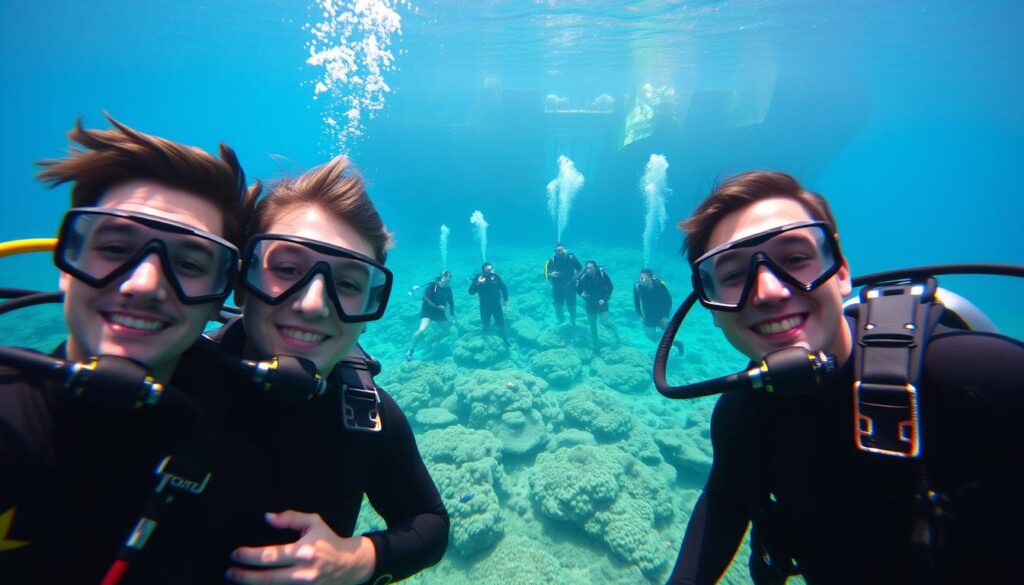
Knowledge Sharing and Skill Development
Dive clubs are great for learning and growing. You can join workshops and talks. This helps everyone get better at diving.
Cost Savings on Equipment and Trips
Being in a dive club can save you money. Clubs often get deals on gear and trips. You can also share things, which saves even more.
Social Connections and Lifelong Friendships
Dive clubs are also about making friends. You’ll meet people at events and gatherings. These friendships can last a long time.
Being in a dive club is rewarding. You’ll dive with friends, learn new things, and save money. It’s a great way to enjoy diving.
Types of Dive Clubs You Can Join
Dive clubs come in many types. You can pick one that matches your diving dreams. Whether you dive for fun or for adventure, there’s a club for you.
Recreational Dive Clubs
Recreational dive clubs are great for those who dive for fun. They plan local dives, social events, and training. It’s a place to meet others who love diving.
Technical Diving Groups
Technical diving groups are for the advanced. They dive deep and learn new skills. It’s for those who want to explore more underwater.
Conservation-Focused Organizations
Some clubs focus on saving the sea. They work on projects to protect marine life. It’s perfect for those who want to help the ocean.
University and Educational Clubs
University dive clubs are for students. They dive, learn, and grow. It’s a chance to study marine life and conservation.
PADI vs. NAUI Affiliated Clubs
Some clubs are linked with PADI or NAUI. Both teach diving well, but differently. Your choice depends on what you want to learn.
Independent Dive Communities
Independent clubs are different. They offer a personal diving experience. They’re great for those who want a relaxed dive scene.
Being part of a dive club is rewarding. You’ll meet new friends, learn new things, and see new places. There’s a club for everyone, so you’re sure to find the right one.
Prerequisites Before Joining a Dive Club
Before you join a dive club, there are a few things to think about. It’s a great way to improve your diving. But, you need to be ready.
Certification Requirements
You must have the right scuba diving certification to join. Most clubs want you to have at least an Open Water Diver certification. This lets you join in dive events.
Entry-Level vs. Advanced Clubs
Some clubs are for beginners, while others are for more experienced divers. It’s important to find a club that fits your level and goals.
Equipment Considerations
Having the right gear is key for safe diving. Clubs might have rules for equipment to keep everyone safe in the buddy network.
Experience Levels and Expectations
Clubs have divers at different levels. Knowing what the club expects and your own level is important. It makes diving fun for everyone.
Insurance and Liability Concerns
Clubs might ask for dive insurance. It’s important to know about insurance and liability rules. This keeps everyone safe while diving.
How to Find Dive Clubs in Your Area
Finding a dive club near you is simple with the right tools. Whether you dive a lot or just a little, joining a local club is great. It lets you meet people who love diving as much as you do.
Online Resources and Directories
The internet is full of ways to find dive clubs. Start by looking for national diving groups and local forums.
National Diving Associations
Groups like USA Diving and PADI have lists of clubs. They show where to find dive clubs and training spots all over.
Regional Diving Forums
Online groups and social media for diving in your area are helpful. They talk about local spots, share tips, and plan events.
Local Dive Shops as Gateways
Local dive shops are not just for buying gear. They also share info on dive clubs. Many shops work with clubs and can tell you about meetings and events.
Social Media Communities
Facebook and Instagram have diving groups. Joining these can connect you with local divers. You’ll also get updates on events and club info.
Dive Shows and Expos in the United States
Dive shows and expos are great for finding clubs. They bring together diving pros, makers, and clubs. It’s a chance to meet locals and learn about clubs.
With these tips, finding and joining a dive club is easy. It will make diving even more fun and rewarding.
Researching the Right Club for Your Diving Style
Finding the right dive club is key to a great diving experience. It should match your diving style, skill level, and where you live. Divers need to do their homework, looking at important factors.
Assessing Club Activities and Focus
Look at what the club does and what they focus on. Some clubs are for recreational diving. Others might do technical diving or conservation efforts.
A club that does dive events and has a good buddy network is more fun.

Reviewing Club Reputations
How good a club is matters a lot. You can check this by:
- Online Reviews and Testimonials: Websites and social media have reviews from members. They tell you what’s good and bad.
- Speaking with Current Members: Talking to members gives you a real feel of the club.
“Joining a dive club was one of the best decisions I made as a diver. The camaraderie and shared experiences have enriched my diving life.”
Compatibility with Your Diving Goals
Make sure the club’s goals match yours. Do you want to get better, see new places, or help the ocean? The club should help you reach your goals.
Geographic Considerations for U.S. Divers
In the U.S., where the club is matters. A club close to you makes it easier to join local divers events.
| Consideration | Description | Importance |
|---|---|---|
| Club Activities | Types of dives and events organized | High |
| Reputation | Member reviews and testimonials | High |
| Compatibility | Alignment with personal diving goals | High |
| Location | Geographic convenience for members | Medium |
How to Join a Dive Club: The Step-by-Step Process
To join a dive club, follow a few easy steps. It’s a great way to meet other divers and enjoy diving activities together.
Initial Contact and Introduction
Start by contacting the club. You can email or call them. Look for their website or social media for contact info.
Email Templates and Communication Tips
Write a clear email for your first contact. Here’s a simple template:
- Introduction: Say hello and why you want to join.
- Background: Share your diving experience and certifications.
- Questions: Ask about the club’s activities and events.
This template helps make a good first impression.
Attending Trial Meetings or Events
Many clubs invite you to try out. It’s a chance to meet members and see what the club is like.
Membership Application Process
After your first meeting, apply for membership. You’ll need to fill out a form and provide documents.
Common Application Requirements
Here’s what you might need:
| Requirement | Description |
|---|---|
| Diving Certification | Proof of your diving certification. |
| Diving Experience | Your diving history, including dives and types. |
| Personal Details | Your contact info and personal details. |
Verification of Certifications
Clubs check your certifications. They might look at your card or call the agency.
Dues and Financial Commitments
Joining a club means paying dues. You might also pay for activities and trips.
Typical Fee Structures in U.S. Dive Clubs
Fees vary by club. Here’s a general idea:
| Fee Type | Typical Cost |
|---|---|
| Membership Dues | $50 – $200 per year |
| Event Fees | Depends on the event |
| Trip Costs | Varies with the trip |
Know the costs before joining.
What to Expect at Your First Club Meeting
Going to your first dive club meeting can be both fun and a bit scary. But knowing what to expect can help a lot. This first meeting is a chance to meet other divers, learn about the club, and see how dive events are planned.
Common Meeting Formats
Dive club meetings can be different, but they usually mix presentations, talks, and planning. Some clubs are very formal, while others are more laid-back. You might hear about diving topics, upcoming dive events, or new diving techniques and safety rules.

Introductions and Social Dynamics
First meetings often start with introductions. Members share their diving stories and what they like about diving. This is a great time to meet others who love diving as much as you do. Be ready to talk about your diving history and what you want to get from the club.
Participating in Discussions
It’s important to join in at dive club meetings. Members talk about planning dives and helping the ocean. Don’t be shy; your ideas are important, and it’s a good way to meet others in the scuba club.
Dive Planning Protocols
Planning dives is a big part of dive club meetings. Clubs have rules for organizing dive events, like picking sites and dates, and making sure everyone is safe. Knowing these rules can help you enjoy your diving more.
Dive Club Events and Activities
Joining a dive club opens up a world of fun. You get to do many things that make diving better. Dive clubs have activities for all levels and interests, bringing everyone together.
Local Diving Excursions
Local dives are a big part of club life. They let members see cool spots close to home. Each dive is planned to fit everyone’s skill level.
Weekend Trips and Day Dives
Weekend trips and day dives are a hit. They let members see new places and dive with friends. Everything is well-planned for a safe and fun time.
Travel Opportunities and Group Trips
Dive clubs also plan big trips. These can be to places in the country or far away. It’s a chance to dive in different places and meet new people.
Domestic and International Destinations
Trips range from the Caribbean’s reefs to the Mediterranean’s shipwrecks. Members pick based on what they like and want to see.
Training Workshops and Skill Development
Clubs also offer training. These sessions help members get better at diving. They learn new things and feel more confident.
Conservation Projects and Volunteer Work
Clubs help protect the ocean too. Members do things like clean beaches and help marine life. It’s a way to give back and make a difference.
“Diving has given me so much more than just the thrill of exploring the underwater world; it’s the community, the friends, and the sense of purpose that comes with being part of something bigger than myself.”
Social Events and Non-Diving Activities
Clubs also have social events. These help members become friends and feel part of a community. Events can be anything from parties to helping out in the community.
| Event Type | Description | Frequency |
|---|---|---|
| Local Diving Excursions | Exploration of nearby dive sites | Monthly |
| Travel Opportunities | Group trips to domestic and international destinations | Quarterly |
| Training Workshops | Skill development and training sessions | Bi-Monthly |
Dive clubs offer a lot for their members. There’s something for everyone, whether you want to dive better, see new places, or just have fun with friends. Dive clubs are a great place to be.
Building Your Network in the Diving Community
It’s important for divers to build a strong network. This helps them learn more, find new places to dive, and make friends.
Finding Regular Dive Buddies
Joining a dive club helps you find dive buddies. Having someone to dive with makes it safer and more fun.
Compatibility Factors to Consider
When looking for a dive buddy, think about a few things:
- Diving experience and certification level
- Diving style and preferences
- Equipment used
- Communication and planning skills
As Tom Neale once said,
“The sea, once it casts its spell, holds one in its net of wonder forever.”
Finding the right dive buddy makes diving magical.
Mentorship Opportunities
Mentorship is a big plus in the dive community. Experienced divers can teach and help others get better.
Professional Connections
Being in a dive club can also help you meet professionals. You might meet dive instructors, photographers, or marine biologists.
Cross-Club Networking in the U.S.
Divers can also meet others from different clubs. This opens up new places to dive and more friends.

By using these chances, divers can make a strong network in the diving world.
Advancing Your Diving Skills Through Club Resources
Dive clubs offer many chances to get better at diving. They have lots of knowledge and tools to help you dive better.
Specialized Training and Workshops
Being in a dive club means you get special training. Experienced teachers lead these sessions. They help you learn new things like how to navigate underwater.
“The right training can make all the difference in a diver’s career,” says a renowned diving instructor. “Dive clubs offer a platform for divers to learn from the best and gain confidence in their abilities.”
Equipment Trials and Demos
Dive clubs let you try out new diving gear. This is great for those who want to upgrade or try something new.
Learning from Experienced Members
Learning from others in the club is a big plus. You can:
- Have casual talks and share stories
- Get matched with a mentor for more formal learning
Informal Knowledge Transfer
Members share tips and stories all the time. This is a big help for new divers.
Structured Mentoring Programs
Some clubs have special mentoring programs. This means you get one-on-one help from more experienced divers.
Certification Advancement Opportunities
Dive clubs help you get certified at higher levels. They offer courses for advanced certifications.
By going to dive events and meeting other divers, you can get better at diving. You’ll also join a fun diving community.
Contributing to Your Dive Club
Being part of a dive club means you can help it grow. You can do many things to make the club better. This helps everyone have a great time.
Volunteer Opportunities
Volunteering is a big way to help. Dive clubs need help with events and trips. By volunteering, you make these activities run smoothly.
Leadership Roles
Leading the club is another important way to help. You can be on a committee or be an officer. These roles help decide what the club does.
Committee Positions
Committee roles have specific jobs. You might plan events or handle communications. These jobs are key to the club’s success.
Officer Responsibilities
Officers lead the club and make big decisions. They make sure the club follows its rules and goals. Officers are chosen by the members and have a big impact.
Sharing Your Unique Skills
Sharing your skills is also a great way to help. If you’re good at diving or photography, share what you know. This helps everyone in the club.
Organizing Events and Trips
Planning events and trips is another way to help. If you’re good at organizing, you can plan dives or trips. This adds new experiences for the club.
By doing these things, you make your dive club better. You also make your own diving experience better. Plus, you help others in the community.
Overcoming Common Challenges in Dive Club Membership
Joining a scuba club can bring many joys. But, you might face some hurdles too. Knowing how to tackle these can make your club experience better.
Time Management and Commitment
It’s key to manage your time well. This helps you fit in club activities and other life stuff. Talk to your club friends about when you’re free.
Navigating Group Dynamics
How a group works together can really shape your club experience. It’s important to understand these dynamics. Diving weighting system – Wikipedia
Dealing with Different Personalities
Scuba clubs are full of people from all walks of life. Learning to get along with everyone can make your club time richer.
Conflict Resolution
Disagreements can happen in any group. Knowing how to solve these problems in a good way is crucial for a happy club.
Balancing Personal and Club Diving Goals
Everyone in the club has their own diving dreams. Finding a way to mix these with the club’s goals is key to enjoying your time.
Maintaining Enthusiasm Long-Term
To keep the excitement going, try new things and connect with others in the club. This keeps your passion alive.
| Challenge | Solution |
|---|---|
| Time Management | Prioritize commitments and communicate with club members. |
| Group Dynamics | Understand and adapt to different personalities and resolve conflicts. |
| Balancing Goals | Align personal diving goals with club objectives. |
By tackling these common issues, club members can build a supportive space. This space encourages everyone to grow and have fun together.
Conclusion: Diving Deeper Through Community
Joining a dive club makes diving better. It gives you a supportive group and chances to grow. You meet others who love diving, creating a safe and fun diving experience.
Being in a scuba club means you get to go on dives and trips. You also help with conservation projects. These activities help you get better at diving and make friends for life.
Being part of a dive club is very rewarding. You feel like you belong with people who love diving as much as you do. Together, you can see more and have a better diving experience.
If you want to dive more, join a local dive club. You’ll get support and go on many dives. It’s a great way to improve your skills, meet new people, and make memories that last.
FAQ
What are the benefits of joining a dive club?
Dive clubs offer many benefits. You get safer diving with a buddy. You also learn new things and save money. Plus, you make friends with other divers.
What types of dive clubs are available for members to join?
There are many dive clubs out there. You can find clubs for fun diving, technical diving, saving the ocean, and even school clubs. Each one has its own special things to offer.
What are the prerequisites for joining a dive club?
To join a dive club, you need to meet some requirements. You must have the right certification and equipment. You also need to know about insurance and safety. This makes sure you’re ready for fun dives.
How can I find a dive club in my area?
Finding a dive club is easy. You can search online or visit local dive shops. Social media and dive shows are also great places to find clubs. This way, you can meet divers near you.
What should I expect at my first dive club meeting?
At your first meeting, you’ll meet new people. There will be introductions and chances to talk. You’ll also learn about the club’s plans for dives. It’s a great way to get to know everyone.
How can dive clubs help me advance my diving skills?
Dive clubs offer many ways to improve your skills. They have special training and workshops. You can try out new gear and learn from experts. This helps you grow as a diver.
How can I contribute to my dive club?
You can help your dive club in many ways. You can volunteer, take on a leadership role, or share your skills. Organizing events is also a great way to give back. It makes the club a better place for everyone.
What are some common challenges in dive club membership, and how can they be overcome?
Some challenges include finding time and dealing with group issues. It’s also important to balance your own diving goals with the club’s. But, talking openly and being flexible can help. This way, you can enjoy diving with your friends.
Can joining a dive club help me find a reliable dive buddy?
Yes, joining a dive club is a great way to find a buddy. You’ll meet other divers at events and dives. This makes it easy to find someone to dive with.


