

Diving is fun but needs safety first. Equalizing ear pressure is key to avoid pain or harm. When you go down, the pressure goes up. This can hurt if you don’t manage it right.
There are ways to equalize your ears. You can try the Valsalva, Toynbee, or Frenzel maneuvers. Learning these is important for a good dive.
Key Takeaways
- Ear equalization is crucial for safe diving.
- Several techniques can be used for ear equalization.
- Mastering these techniques ensures a safe diving experience.
- Proper ear equalization prevents discomfort and injury.
- Divers should practice ear equalization techniques regularly.
Understanding Ear Pressure and Diving
Diving means knowing how water pressure affects our bodies, especially our ears. The change in pressure when we go down can hurt if we don’t handle it right.
The Science Behind Ear Pressure
Ear pressure changes with the water pressure when we dive. The Eustachian tube helps keep the ear pressure the same as outside. If the outside pressure is too high, it can hurt the eardrum.
Why Equalization is Critical for Divers
Equalizing ear pressure is key to staying safe. Divers use tricks like the and the Toynbee maneuver. These help open the Eustachian tube, letting air in or out to balance the pressure.
Pressure Changes at Different Depths
Pressure changes a lot as we dive deeper. Here’s a table showing how pressure goes up with depth:
| Depth (feet) | Pressure (PSI) |
|---|---|
| 0 | 14.7 |
| 10 | 19.1 |
| 20 | 23.5 |
| 30 | 27.9 |
Knowing these changes helps divers keep their ear pressure right. This way, they can avoid serious ear problems.
The Anatomy of the Ear and Pressure Changes
Divers need to know about the ear’s parts to avoid pain or injury. The ear is complex and very important for safe diving.
Middle Ear Structure
The middle ear is filled with air and helps us hear and balance pressure. It has a thin membrane and three small bones. Knowing about these parts helps divers manage pressure.

Eustachian Tubes and Their Function
The Eustachian tubes link the middle ear to the throat. They are key for balancing ear pressure. They open and close to let air in or out, keeping the eardrum balanced. This is crucial for underwater safety to avoid ear damage.
How Pressure Affects Different Parts of the Ear
Pressure changes can hurt different ear parts in different ways. The outer ear is not affected, but the eardrum and middle ear are very sensitive. If pressure is not balanced, it can cause pain or injury. Divers should follow dive tips for safe descent and equalization.
Knowing how the ear handles pressure helps divers stay safe underwater. This knowledge, along with good diving skills, makes diving safer and more enjoyable.
Risks of Improper Equalization
Divers who don’t equalize their ears right face big problems. The pressure changes underwater can hurt their ears a lot. If they don’t handle it right, they might get sick or hurt their ears badly.
Ear Barotrauma
Ear barotrauma is a common injury for divers. It happens when the pressure inside and outside the eardrum gets too different. This can hurt the middle ear and cause pain, hearing loss, and discomfort.
Tympanic Membrane Rupture
A worse problem is when the eardrum tears because of too much pressure. This can make hearing worse and might even get infected.
Long-term Hearing Damage
Not equalizing ears right can hurt your hearing for a long time. You might keep hearing less or have ringing in your ears. This can really change how you live.
Warning Signs You Shouldn’t Ignore
- Pain or discomfort in the ears during or after diving
- Hearing loss or muffled hearing
- Tinnitus or ringing in the ears
- Dizziness or vertigo
Seeing these signs and acting fast can stop bigger problems. Divers need to know the dangers of not equalizing ears. They must learn to handle ear pressure well.
Equalizing Ear Pressure Diving: Fundamental Principles
To dive safely, you must know how to equalize ear pressure. This skill keeps you from feeling uncomfortable or getting hurt.
Pre-Dive Preparation
Get ready before you dive. Check if your Eustachian tubes work by doing a simple test. Pinch your nose and try to blow gently through it.
Pre-dive checks also mean making sure you’re not congested or allergic. These things can mess with your Eustachian tubes.
Frequency of Equalization During Descent
Equalize your ears frequently during descent. Aim to do it every 1-2 feet (0.3-0.6 meters) down.
- Start equalizing as soon as you begin your descent.
- Continue to equalize at regular intervals until you reach the desired depth.
Monitoring Pressure Changes
Keep an eye on pressure changes. If you find it hard to equalize, stop descending and ascend slightly. Then, try again.
The “Early and Often” Rule
The “early and often” rule is simple. Start equalizing early and keep doing it often. This makes it easier and safer.
“The key to successful equalization is to start early and equalize often. This reduces the risk of ear barotrauma and makes the diving experience more comfortable.”
Some good dive tips include practicing on the surface. Also, listen to your body during descent. If you feel pain or have trouble, slow down or change how you equalize.
By sticking to these principles and using pressure tricks, diving can be safer and more fun.
The Valsalva Maneuver: Basic Technique
Ear equalization is key for divers. The Valsalva maneuver is a common method. It’s a simple way to balance ear pressure during dives.
Step-by-Step Instructions
To do the Valsalva maneuver right, follow these steps:
- Pinch your nose shut with your fingers.
- Close your mouth.
- Gently blow air through your nose like you’re blowing your nose.
- The air in your ears should balance, easing any pain.
Common Mistakes to Avoid
Don’t blow too hard with the Valsalva maneuver. It can hurt your eardrum. Also, make sure to pinch your nose right to equalize well.
When to Use This Technique
Use the Valsalva maneuver when you’re going down in the water. It helps avoid ear pain or injury by balancing pressure.
Limitations of the Valsalva Method
The Valsalva maneuver works for many divers. But, it’s not for everyone. Some people might need other ways to equalize.
Knowing how to use the Valsalva maneuver is important for underwater safety and ear equalization. It helps divers avoid ear injuries during dives.
The Toynbee Maneuver
The Toynbee maneuver is great for ear pressure while diving. It involves swallowing to open the Eustachian tube. This helps balance the ear pressure.
How to Perform Correctly
To do the Toynbee maneuver, swallow while pinching your nose. This opens the Eustachian tube. Air can then move in or out of the middle ear, balancing the pressure. Practice this on land first to feel comfortable and good at it.
Benefits Over Other Methods
The Toynbee maneuver is kinder than some other methods. It’s good for those who find other ways too hard. Key benefits include:
- Less chance of ear damage
- Gentle on the Eustachian tubes
- More comfortable for some divers
Limitations and Considerations
The Toynbee maneuver might not work for everyone. If your Eustachian tube is blocked, it won’t help. Know how your body reacts and use other methods if needed.
Practice Exercises for Mastery
To get better at the Toynbee maneuver, try these exercises:
- Pinch your nose and swallow a few times a day to remember how.
- Practice in a shallow pool or during a dive in a small space.
- Begin with slow swallows and get faster as you get more comfortable.
Doing these exercises daily will help you equalize ear pressure better. This makes diving more fun.

The Frenzel Maneuver for Advanced Divers
The Frenzel maneuver is a smart way to equalize ear pressure. It’s great for experienced divers. This method helps you control and equalize pressure better, especially at deeper depths.
Technique Breakdown
To do the Frenzel maneuver, first close the glottis. Then, pinch your nose shut. Finally, use your throat muscles to push air into the Eustachian tubes. It takes practice to get it right.
- Close the glottis to prevent air from escaping.
- Pinch the nose to direct air towards the Eustachian tubes.
- Contract the throat muscles to push air into the tubes.
Practice Exercises
To learn the Frenzel maneuver, start with simple exercises:
- Practice on land first to feel the muscle movements.
- Then, try it in shallow water where the pressure is lower.
- As you get better, dive deeper.
Troubleshooting Common Issues
When you first try the Frenzel maneuver, you might face some problems. These include:
- Having trouble finding the right muscles.
- Not being able to open the Eustachian tubes well.
To solve these issues, practice a lot. You might also want to get help from a diving instructor.
Transitioning from Valsalva to Frenzel
If you’re used to the Valsalva maneuver, switching to Frenzel might be hard. It’s because Frenzel uses different muscles. To get better, do exercises that strengthen your throat muscles.
Learning the Frenzel maneuver can make diving better for advanced divers. You’ll equalize your ears better and have a more comfortable dive.
Additional Equalization Techniques
There are more ways to equalize ear pressure besides the Valsalva and Toynbee maneuvers. Divers learn many techniques to handle different situations underwater.
The Lowry Technique
The Lowry Technique mixes the Valsalva maneuver with swallowing. It helps those who struggle with the Valsalva or Toynbee alone. Swallowing helps open the Eustachian tube better.
The Edmonds Technique
The Edmonds Technique makes you move your jaw in circles while doing the Valsalva. It opens the Eustachian tube wider. This is great for deeper dives.
The BTV (Beance Tubaire Volontaire) Method
The BTV Method opens the Eustachian tube on purpose. It takes practice but works well. You move your throat muscles to open the tube.
Hands-Free Equalization
Being able to equalize without hands is useful. It’s good when you need your hands for other things. The BTV Method can be done without hands.
| Technique | Description | Usefulness |
|---|---|---|
| Lowry Technique | Valsalva + swallowing | Effective for difficult equalization |
| Edmonds Technique | Valsalva + jaw movement | Useful for deeper dives |
| BTV Method | Voluntary Eustachian tube opening | Advanced, highly effective |
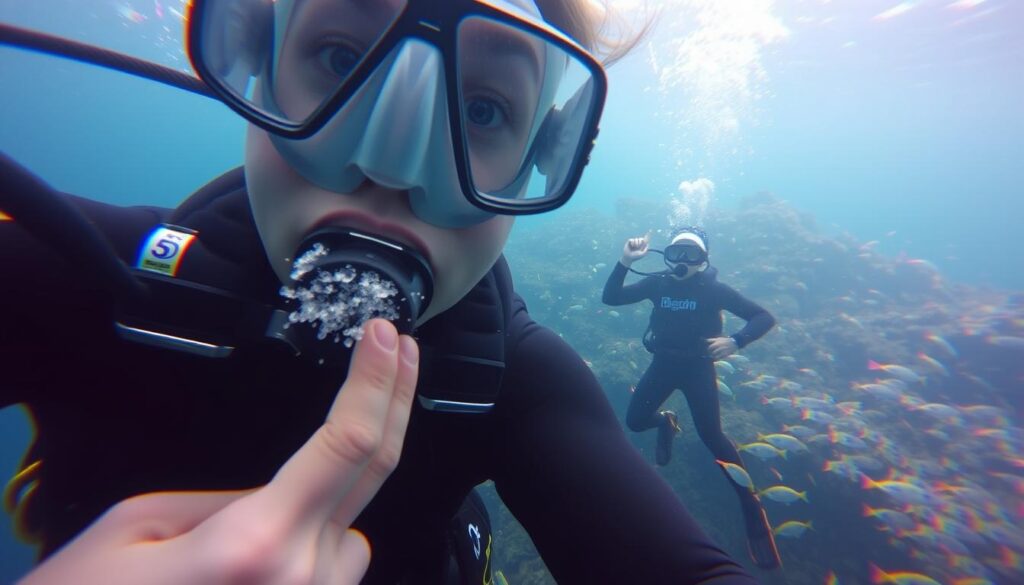
Learning these extra techniques makes diving safer and more fun. By trying these methods, divers can handle ear pressure better. This lowers the chance of pain or injury.
Equalization Problems and Solutions
Many divers struggle with equalizing underwater. This can be due to many reasons like body shape, congestion, or wrong technique. Knowing how to solve these problems is key for a safe dive.
One-Sided Equalization Issues
One-sided equalization problems make one ear hurt. This might be because of a blocked Eustachian tube or different ear shapes. To fix this, try the Valsalva maneuver or the Toynbee maneuver on the hurt side.
Some pressure tricks that can help include:
- Pinching the nose shut and blowing gently
- Swallowing or yawning to open the Eustachian tube
- Changing how you dive to equalize more often
Persistent Blockage
Persistent blockage is a big problem for divers. It can be caused by stuffiness or body shape. Using decongestants or nasal sprays can help. But, always follow dive tips like equalizing often and not diving when stuffy.
| Symptom | Possible Cause | Solution |
|---|---|---|
| Persistent ear pain | Congestion or blockage | Use decongestants or adjust equalization technique |
| One-sided hearing loss | One-sided equalization failure | Try alternative equalization techniques like the Toynbee maneuver |
Reverse Block During Ascent
A reverse block happens when ear pressure is higher than water pressure going up. To avoid this, go up slowly and equalize often. If it hurts, stop going up and go down a bit.
When to Abort a Dive
If you can’t equalize and it hurts a lot, stop diving. Listen to your body and don’t ignore pain. Ignoring it can hurt you badly.
Emergency Protocols for Severe Pain
If you’re in severe pain, follow emergency protocols. This means:
- Go up to the surface slowly
- Don’t dive again until it’s fixed
- See a doctor if the pain doesn’t go away
Knowing about equalization problems and how to solve them makes diving safer and more fun. Practice pressure tricks and follow dive tips to avoid these issues.
Special Considerations for Beginners and Children
For beginners and kids, learning to equalize ear pressure is key. It helps avoid discomfort and injury while diving. This skill takes practice and patience, especially for new divers.

Teaching Children to Equalize
It’s important to teach kids how to equalize ear pressure for their safety and fun. Explain it in simple terms and show them how to do it. They should practice on land first.
One good way is to have them pinch their nose and swallow or blow gently. This opens the Eustachian tube, letting air into the middle ear and balancing the pressure.
Common Beginner Mistakes
Beginners often make mistakes when trying to equalize ear pressure. They might not do it enough or use the wrong method. This can cause discomfort, pain, or even harm.
- Not equalizing early and often enough during descent.
- Using the Valsalva maneuver too forcefully, which can damage the eardrum.
- Failing to monitor their body’s response to pressure changes.
Building Confidence with Equalization
Getting better at ear equalization takes practice and getting used to different diving conditions. Start in shallow waters and move to deeper dives as you get more comfortable.
Gradual Depth Progression
| Depth Range | Equalization Frequency | Monitoring |
|---|---|---|
| 0-10 meters | Every 1-2 meters | Check for discomfort or pain |
| 10-20 meters | Every 2-3 meters | Monitor for signs of ear barotrauma |
| 20+ meters | Every 3-5 meters | Regularly check Eustachian tube function |
By following a gradual depth progression and practicing ear equalization often, beginners and kids can feel more confident. They can dive safely and have fun.
Equalization for Different Diving Environments
Divers need to learn how to equalize ear pressure, no matter where they dive. Whether it’s in freshwater or saltwater, each place has its own challenges. These challenges need different techniques and knowledge.
Freshwater vs. Saltwater Diving
Saltwater is denser than freshwater. This means it can push down on you faster. So, you might need to equalize your ears more often in saltwater.
| Diving Environment | Equalization Considerations |
|---|---|
| Freshwater | Less dense, potentially slower descent |
| Saltwater | Denser, potentially faster descent, more frequent equalization needed |
Deep Diving Considerations
Going deep requires you to equalize your ears more often. This is because the pressure gets much higher. It’s important to keep your ears equalized to stay comfortable and safe.
Altitude Diving Adjustments
When you dive at high altitudes, it’s different. The air pressure is lower. You’ll need to adjust how you equalize your ears to handle this change.
Challenging Conditions: Cold Water and Currents
Diving in cold water or strong currents is tricky. Cold water makes your Eustachian tubes smaller, making equalization harder. Also, currents can make it harder to control your descent and ascent. So, you need to pay extra attention to equalizing your ears.
In short, learning to equalize your ears in different places is key to safe diving. By knowing how to adapt to each environment, you can dive better and have more fun.
Medical Conditions Affecting Equalization
Some health issues can make it hard for divers to equalize ear pressure. It’s key to know about these to dive safely.
Congestion and Allergies
Congestion and allergies can mess with ear equalization. If your nose and Eustachian tubes are blocked, it’s tough to balance ear pressure. If you have allergies or a cold, taking decongestants or antihistamines before diving might help.
Eustachian Tube Dysfunction
Eustachian tube dysfunction can also make equalizing hard. This tube helps control middle ear pressure. If it doesn’t work right, divers might face ear problems.
Medications and Their Effects
Some meds can mess with ear pressure equalization. For example, decongestants might help but can cause more congestion if used too much. Always talk to your doctor about your meds and how they might affect diving.
When to Consult a Diving Physician
If you’re having trouble equalizing your ears, see a diving doctor. They can check you out and give advice on managing health issues. Regular visits can keep you safe while diving.
Knowing and handling health problems that affect ear equalization can make diving safer. Tricks like the Valsalva maneuver and Toynbee maneuver can help with ear pressure.
Training Your Ears for Better Equalization
Learning to equalize your ears is key for underwater safety. Divers need to adjust ear pressure to stay safe. Doing exercises regularly can make you better at it.
Daily Exercises to Improve Technique
Divers can do simple exercises every day. The Valsalva maneuver is one. You pinch your nose and blow gently. The Toynbee maneuver is another. You swallow while pinching your nose.
- Do the Valsalva maneuver often.
- Try the Toynbee maneuver to make your Eustachian tubes stronger.
- Do the Frenzel maneuver by pinching your nose and making a “K” or “T” sound.
Building Ear Flexibility Over Time
Being consistent is important for ear flexibility. Doing equalization exercises often makes your Eustachian tubes more flexible. This makes it easier to equalize during dives.
“The key to successful equalization is consistent practice and patience.” – Expert Diver
Tracking Your Progress
Writing down your equalization practice can help you see how you’re doing. Note any challenges or successes.
| Date | Exercise | Notes |
|---|---|---|
| 01/01/2023 | Valsalva | Easy |
| 02/01/2023 | Toynbee | Some difficulty |
Pre-Dive Conditioning Routines
Doing exercises before you dive is a good idea. It gets your ears ready. This includes equalization exercises to make sure your Eustachian tubes work right.
By making these exercises part of your daily routine, you can get better at ear equalization. This makes your diving safer and more enjoyable.
Conclusion: Mastering Ear Equalization for Safe Diving
Learning to equalize your ears is key for safe diving. It helps you avoid ear problems. This includes ear barotrauma and hearing damage.
Try different ways to equalize your ears, like the Valsalva and Toynbee methods. These dive tips help a lot. Knowing how to handle pressure tricks is also important.
Practice makes you better at equalizing your ears. This makes diving safer and more fun. The more you practice, the better you’ll get at managing ear pressure.
FAQ
What is ear equalization, and why is it crucial for scuba diving?
Ear equalization balances ear pressure with water pressure. It’s key for scuba diving. Not doing it can hurt your ears.
How often should I equalize my ears while diving?
Equalize your ears every 1-2 meters while going down. This stops pressure buildup and damage.
What is the Valsalva maneuver, and how is it used for ear equalization?
The Valsalva maneuver is pinching your nose and blowing gently. It helps balance ear pressure.
Are there any risks associated with using the Valsalva maneuver?
Yes, wrong or hard use can hurt your eardrum or tubes. Use it gently and right.
What are some alternative ear equalization techniques?
Other methods include Toynbee, Frenzel, Lowry, Edmonds, and BTV. Each works differently for different people.
How can I prevent ear equalization problems during a dive?
Equalize early and often, watch pressure, and don’t dive with a stuffy nose.
What should I do if I experience ear pain or difficulty equalizing during a dive?
Stop going down, go up a bit, and try again. If it still hurts, stop diving.
Can medical conditions affect my ability to equalize my ears?
Yes, things like a stuffy nose or allergies can make it hard. See a diving doctor if worried.
How can I improve my ear equalization technique?
Practice every day, get your ears used to it, and keep track of how you’re doing.
Are there any special considerations for children and ear equalization?
Yes, kids need to learn to equalize early. Start with shallow dives and get them more confident and skilled. Confidence – Wikipedia


