
Going on a dive trip is exciting. But, you need to plan well to stay safe and have fun. It’s important to have the right stuff and know what to do.
A good scuba packing list is key for a great trip. It has dive trip essentials like the right gear and safety stuff. Planning ahead means no last-minute worries. You can enjoy your dive more.
Key Takeaways
- Plan ahead with a comprehensive scuba packing list.
- Include essential gear and safety equipment.
- Check the weather and dive site conditions before the trip.
- Pack personal items and emergency supplies.
- Verify the condition and functionality of all gear.
Planning Your Dive Trip Packing Strategy
Planning your packing is key for a smooth dive trip. A good plan makes sure you have all dive trip essentials without too much stuff.
Understanding Different Types of Dive Trips
Dive trips vary, and so does packing. Knowing your trip type helps pack better.
Day Trips vs. Liveaboards vs. Resort Diving
Day trips mean packing light. Liveaboards need careful planning because of small space. Resort diving lets you unpack and store gear.
Duration and Frequency of Dives
How long and often you dive affects what to pack. More dives or longer trips might mean extra gear, like dive computer batteries or equipment parts.
Climate and Destination Considerations
The trip’s climate and location shape what you pack. Each place needs its own gear.
Tropical vs. Temperate vs. Cold Water Destinations
Tropical places need less warm gear. Cold water dives require thick wetsuits or drysuits. Temperate waters are in the middle.
Seasonal Variations and Weather Patterns
Knowing the season and weather helps prepare for things like strong currents or poor visibility.
Essential Documents and Pre-Trip Preparations
Going on a dive trip needs more than just scuba gear. You also need the right documents and planning. Having everything ready can make your trip better and more fun.
Diving Certifications and Logbooks
It’s important to have the right diving certifications and a current logbook. These prove you know how to dive and how much experience you have.
Digital vs. Physical Documentation
Nowadays, digital copies of your certifications and logbook are okay. But, it’s smart to have both for extra safety.
Specialty Certification Requirements
Some places need special certifications, like for deep or wreck diving. Make sure you have the right ones for what you plan to do.

Travel Insurance and Emergency Contacts
Travel insurance that covers diving is a must. It helps if you get hurt or if your trip gets cancelled.
Dive-Specific Insurance Coverage
Find insurance that’s made for scuba diving. It should cover things like getting taken to the hospital or getting out of a bad situation.
DAN Membership and Benefits
Being part of Divers Alert Network (DAN) gives you help in emergencies and other perks for divers.
Destination Research and Local Regulations
It’s key to know the local diving rules and how to act. Learn about the marine park rules and how to protect the sea.
Marine Park Rules and Conservation Guidelines
Know the rules to keep the sea safe. This means not throwing trash and not touching the sea creatures.
Local Diving Protocols and Etiquette
Learning how to dive like a local is important. It means not touching the sea life and staying away from other divers.
By getting your documents and planning right, your dive trip will be better. It’s all about being ready and knowing the rules.
Core Scuba Equipment: What to Pack for a Dive Trip
Having a good scuba packing list is important for a fun dive trip. The right gear makes diving safe and fun. Divers need to pack the essential scuba equipment for their trip.
Mask, Snorkel, and Fins
The mask, snorkel, and fins are basic scuba gear. A mask that fits well is key for clear underwater views. It’s also smart to pack a backup mask in case the first one breaks.
Full-Foot vs. Open-Heel Fins for Travel
Choosing between full-foot fins and open-heel fins depends on the dive and your liking. Full-foot fins work well in warm waters. Open-heel fins are good with diving boots.
Backup Mask and Anti-Fog Solutions
Always bring a backup mask. Using anti-fog solutions helps keep your mask clear. This makes sure you can see well during your dive.
BCD and Regulators
The BCD (Buoyancy Control Device) and regulator are vital for safe diving. A travel-friendly BCD that’s light and easy to pack is best for flying.
Travel-Friendly BCD Options
Look for a BCD that’s small and easy to pack for travel. Some BCDs have built-in weights, making packing simpler.
Regulator Maintenance Before Travel
Make sure your regulator is in good shape before you travel. Regular checks and maintenance prevent problems during your dive trip.
Exposure Protection: Wetsuits and Drysuits
Wetsuits and drysuits keep you warm during dives. The choice between them depends on the water’s temperature and your preference.
Thickness Selection Based on Destination
The suit’s thickness should match the water temperature. Thicker suits are for cold waters, and thinner ones are for warm waters.
Packing and Folding Techniques
To save space, use smart packing and folding techniques for your wetsuit or drysuit. Rolling it can make it smaller.
Dive Computers and Safety Equipment
Dive computers and safety gear are key for safe diving. They make diving fun and safe. These tools help prevent accidents and handle emergencies.
Choosing the Right Dive Computer for Travel
Choosing the right dive computer is important. Think about the diving you’ll do, the features you need, and how easy it is to use.
Air Integration vs. Basic Models
Dive computers vary from simple to advanced air-integrated systems. Air-integrated dive computers show air supply in real-time. Basic models need air pressure entered manually but are cheaper and easier to use.
- Air-Integrated Models: Show air supply in real-time.
- Basic Models: Need air pressure entered manually.
Battery Considerations and Backup Options
Battery life is key for long dives. Some computers have replaceable batteries, others need a pro to change them. Always have a backup computer or timer.
- Check your dive computer’s battery life.
- Choose a model with replaceable batteries.
- Always have a backup computer or timer.
Surface Marker Buoys and Signaling Devices
Surface marker buoys (SMBs) and signaling devices are vital for safety. They’re important during ascent and when surfacing away from the boat.
Compact SMBs and Deployment Systems
Compact SMBs are easy to use and carry. They’re small, light, and simple to deploy. They’re a must-have for many divers.
- Compact SMBs are easy to deploy and manage.
- Look for SMBs with reliable deployment systems.
Whistles, Mirrors, and Emergency Signals
Whistles and mirrors are also key in emergencies. They help divers signal for help or attract attention.

First Aid Essentials for Divers
A good first aid kit is essential for divers. It should have supplies for diving injuries, like pressure effects or marine life encounters.
Compact Dive-Specific First Aid Kits
Compact first aid kits for divers are recommended. They’re made for diving injuries.
DAN Oxygen Provider Equipment
DAN oxygen provider equipment is great for first aid kits. It’s key for treating diving emergencies. DAN makes it easy to give oxygen.
By picking the right dive computers and safety gear, divers can stay safe and have fun on dive trips.
Underwater Photography Gear
The underwater world is full of wonders. With the right photography equipment, you can capture its beauty. Underwater photography lets divers keep memories of their dive trips alive. They can share the amazing marine life they’ve seen.
Cameras and Housings
Choosing the right camera and housing is key for underwater photography. You must decide between compact and DSLR systems.
Compact vs. DSLR Systems for Travel
Compact cameras are great for travel because they’re small and easy to use. DSLR systems give better image quality but need more gear and skill.
Housing Protection During Transport
It’s important to protect camera housings when you’re moving them. Use padded cases and make sure the housing is closed tight to keep it safe.
Lighting Equipment
Lighting is very important in underwater photography. It lights up the subject and makes colors pop.
Strobes and Video Lights
Strobes give a quick burst of light to freeze moments. Video lights provide steady light, good for both video and photos.
Arms, Trays, and Mounting Systems
Arms, trays, and mounting systems help place lighting equipment. They let you control the light for creative shots.
Storage and Maintenance Tools
Keeping your underwater photography gear in good shape is crucial. Proper storage and maintenance can make it last longer.
Memory Cards and Backup Solutions
Having enough memory cards and a good backup plan is key. It helps you keep your photos safe and sound.
O-Ring Care and Silicone Grease
Check and care for O-rings often. Use silicone grease to stop leaks in camera housings.
By choosing and caring for your underwater photography gear, divers can take amazing photos of their underwater adventures.
Specialized Equipment for Different Diving Environments
Different diving places need special gear for safety and fun. The place you dive in helps pick the right equipment.
Cold Water Diving Gear
Cold water diving needs special gear to keep warm. You’ll need:
Dry Gloves and Hood Options
Dry gloves and hoods are key for cold water. They keep your hands and head warm. Choose good, warm ones that fit right.
Thermal Undergarments and Insulation
Thermal clothes and extra layers are important. Wear warm wetsuits or drysuits for cold water.
Tropical Diving Essentials
Tropical diving needs gear for sun protection and comfort in warm water.
Rash Guards and Sun Protection
Rash guards protect from the sun and prevent rashes. Remember to use reef-safe sunscreen.
Lightweight Exposure Options
For warm dives, use light suits like shorty wetsuits. They keep you safe without getting too hot.

Technical Diving Considerations
Technical diving needs special gear for safety and good diving.
Stage Bottles and Rigging
Stage bottles and rigging are key for managing gas. They help you dive longer.
Backup Equipment Requirements
Having extra gear is very important. This includes spare regulators and BCDs.
Knowing what your dive needs and packing the right gear makes your trip better. It ensures a safe and fun dive.
Packing Dive Gear for Air Travel
Packing dive gear for air travel is an art. It needs knowledge of weight limits, luggage choices, and protecting your gear. Divers must think about several things to make their journey smooth.
Weight Restrictions and Airline Policies
Knowing airline weight limits and rules is key. Different airlines have different rules for luggage size and weight.
Carrier-Specific Regulations
Every airline has its own dive gear rules. Some airlines are more friendly to scuba gear, with special rules.
Overweight Baggage Strategies
To avoid extra fees, divers can pack heavy items in checked bags. Or, they can spread the weight in different bags.
Carry-On vs. Checked Luggage Strategies
Choosing what to carry on versus check is important. It helps protect your gear and follow airline rules.
Critical Items for Carry-On
Keep important items like dive computers and masks in carry-on. This helps avoid loss or damage.
TSA and International Security Considerations
Knowing security rules is key to avoid delays. Divers should be ready to explain their gear and follow TSA rules.
Protecting Delicate Equipment
Keeping dive gear safe during travel is crucial. The right packaging can make a big difference.
Padded Cases and Specialized Bags
Good, padded cases and dive gear bags are essential. They protect your equipment well.
Regulator and Computer Protection
Be extra careful with sensitive gear like regulators and computers. Use the right padding and handling.
| Equipment | Packing Recommendation | Protection Level |
|---|---|---|
| Dive Computer | Carry-On | High |
| Regulator | Checked, Padded Case | High |
| Fins | Checked, Specialized Bag | Medium |
Liveaboard Packing Considerations
Packing right is key for liveaboard dive trips. You have to pick the right gear and fit it in small spaces. Every item you pack is important.
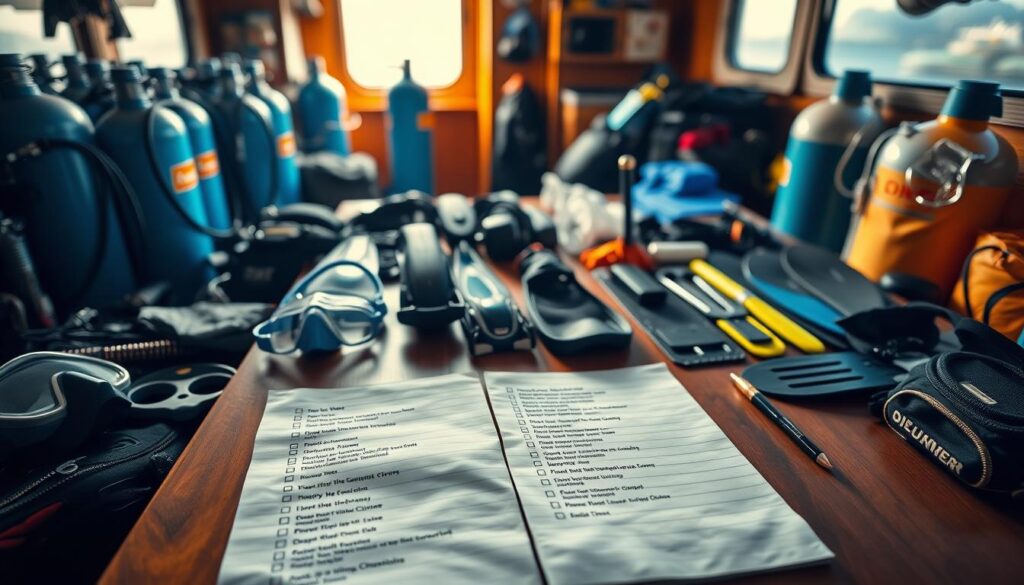
Space Limitations and Storage Solutions
First, know how much space you have on the boat. Use collapsible bags and organizers to save space. This lets you bring all your gear without making a mess.
Collapsible Bags and Organizers
Collapsible bags are great for storing dive gear and clothes. They take up less space when not in use. This helps you use your space better.
Cabin Organization Techniques
Make your cabin neat by setting up areas for different things. Use dividers or bins to keep things organized. This makes your space tidy and your gear easy to find.
Essential Non-Diving Items
Liveaboard trips need more than just dive gear. You’ll want things for fun and comfort when you’re not diving. Entertainment and downtime activities are important for relaxation. And communal living etiquette items help everyone get along.
Entertainment and Downtime Activities
Bring books, games, or a portable player for fun. Also, pack things that make you happy and comfortable.
Communal Living Etiquette Items
Being kind to others on the boat is important. Pack earplugs, eye masks, and other nice-to-haves. This makes living together better.
Seasickness Prevention
If you get seasick, it’s important to prevent it. Learn about medication options and natural remedies. This can make your trip better.
Medication Options and Natural Remedies
There are many ways to stop seasickness. Talk to a doctor before picking what’s best for you.
Acclimation Strategies
Getting used to the sea slowly can help with seasickness. Spend time outside and breathe in fresh air. This can help a lot.
Clothing and Personal Items for Dive Travel
Planning a dive trip means picking the right clothes for underwater and on land. The right clothes make you comfortable and safe.
Climate-Appropriate Attire
Start by knowing the weather at your dive spot. For warm places, wear light, dry clothes. Cold places need warm layers.
Layering Systems for Variable Conditions
Layering lets you change clothes with the water’s temperature. This keeps you comfy all dive long.
Quick-Dry Fabrics and Materials
Quick-dry clothes are key for diving. They dry fast and keep you warm. Look for polyester or nylon.
Sun Protection and Rash Guards
When diving in sunny places, protect your skin. Rash guards and UPF clothes are great for this.
UPF-Rated Clothing Options
UPF clothes block harmful sun rays. They’re vital for long surface times.
Hats, Buffs, and Face Protection
After-Dive Comfort Wear
After diving, wear comfy, dry clothes. Choose light, breathable clothes for relaxing.
Evening and Social Attire
For trips or resorts, bring nice clothes for evenings. Check the dress code first.
Footwear for Boat Decks and Shore Entries
Water shoes or boots protect your feet on boats and shores. Choose ones with grip and drainage.
Diving experts say, “The right clothes are key. They make diving comfy and safe.”
Medications and Health Considerations
Before you go on a dive trip, think about your health and meds. Dive trips can be tough and might put you at risk. So, it’s key to be ready.
Prescription Medications and Documentation
If you take prescription meds, make sure you have enough for your trip and a little extra. Also, carry a doctor’s note that explains your meds and why you need them.
International Travel with Prescriptions
Traveling abroad with meds? Check the laws in your destination. Some places have strict rules about certain meds. Having the right papers can avoid trouble at customs.
Dive-Safe Medication Verification
Make sure your meds are okay for diving. Some meds can make diving risks worse, like getting sick from pressure changes or not thinking clearly.
Dive-Specific Health Products
Don’t forget to pack health items just for diving. This includes ear care, stuff for equalizing ears, and meds to stop sickness from diving.
Ear Care and Equalization Aids
Ear care is key to avoid infections and to help ears adjust to pressure. Ear drops are a must for ear health.
Decompression Sickness Prevention
Some meds and supplements can help prevent sickness from diving. But, only use them if a doctor says it’s okay.
Hydration and Nutrition Supplies
Drinking water and eating right are super important for divers. Bring electrolyte drinks and snacks to keep your energy up during breaks.
Electrolyte Replacements
Electrolyte drinks help keep your body’s balance right. This is very important when you’re diving and after.
Energy Snacks for Surface Intervals
Snacks are a must for energy during breaks. They’re even more important on liveaboard trips where meals might not be at the same time.
Tech and Gadgets for Dive Travelers
Getting ready for a dive trip means thinking about tech and gadgets. The right tech can really help with safety and fun.
Waterproof Electronics
Dive travelers use waterproof electronics to remember their dives and find their way. Dive lights help see in deep or dark places. Having backup options is key for light in emergencies.
Dive Lights and Backup Options
It’s smart to get a good dive light. Look for one that’s bright and tough. Also, have a backup light ready.
Waterproof Cases for Personal Items
Use waterproof cases for phones or cameras. This way, you can take pictures or stay connected without worrying about water damage.
Charging Solutions and Power Adapters
Keeping devices charged is hard, especially on boats or in remote spots. Multi-country adapters are key for charging everywhere.
Multi-Country Adapters
A universal travel adapter is a must. It keeps your devices charged, no matter the local outlets.
Solar and Portable Power Banks
Solar chargers and portable power banks are great for charging gadgets. They’re perfect when you’re not near a power source.
Apps and Digital Resources
The diving world loves dive planning and logging software and marine life identification tools. These digital tools make diving better by giving useful info and insights.
Dive Planning and Logging Software
Apps for planning and logging dives are super helpful. They’re great for both new and experienced divers.
Marine Life Identification Tools
Apps for identifying sea creatures make diving even more fun. They help divers learn about the ocean they’re exploring.
Maintenance and Cleaning Supplies
To have a smooth dive, you need the right cleaning stuff. Taking care of your gear makes it last longer and work better.
Gear Cleaning Essentials
Cleaning your dive gear is key. You should carry travel-size gear soap and rinse aids. These help get rid of salt, dirt, and other bad stuff.
Travel-Size Gear Soap and Rinse Aids
Choosing the right cleaning stuff is important. Travel-size gear soap is safe for your gear. Rinse aids stop water spots and mineral buildup.
Portable Freshwater Solutions
Having fresh water to rinse your gear is not always easy, especially on boats. Portable freshwater solutions are great for rinsing your gear often.
Repair Kits and Spare Parts
For fixing gear, a repair kit and spare parts are a must. This includes O-rings, mask straps, and more.
O-Rings and Mask Straps
O-rings keep your gear working right. Mask straps make sure your mask fits well. It’s smart to carry spares.
Basic Tool Kit for Emergency Repairs
A simple tool kit can help with quick fixes. It should have pliers, screwdrivers, and wrenches.
| Supply | Purpose | Importance Level |
|---|---|---|
| Travel-size gear soap | Cleaning dive gear | High |
| Rinse aids | Preventing water spots | Medium |
| O-rings | Maintaining gear integrity | High |
| Basic tool kit | Emergency repairs | High |
Eco-Friendly Dive Trip Essentials
Divers are now choosing eco-friendly options for their trips. This helps protect the ocean and makes diving better.
Sustainable Alternatives to Single-Use Plastics
Switching to reusable items is a big step. Use refillable containers and bags for your gear.
Reusable Water Bottles and Containers
Get a strong, reusable water bottle and container. Hydro Flask and Klean Kanteen make great ones.
Eco-Friendly Toiletries and Packaging
Look for toiletries with little or biodegradable packaging. Lush and Sea to Summit have good choices for eco-friendly divers.
Reef-Safe Sunscreen and Personal Care Products
It’s key to protect your skin from the sun. But, make sure your sunscreen doesn’t hurt coral reefs. Now, there are many reef-safe sunscreens.
Mineral-Based Sun Protection
Mineral sunscreens work well without harmful chemicals. They use zinc oxide or titanium dioxide.
Biodegradable Hygiene Products
Choose biodegradable soap, toothpaste, and more. This cuts down the trip’s environmental impact.
| Eco-Friendly Product | Brand Example | Benefits |
|---|---|---|
| Reusable Water Bottles | Hydro Flask | Reduces single-use plastics |
| Reef-Safe Sunscreen | Badger | Protects skin and reefs |
| Biodegradable Soap | Dr. Bronner’s | Biodegradable and gentle on skin |
Conclusion: Ensuring a Smooth and Enjoyable Dive Trip
A well-planned dive trip is key to a great experience. Think about the dive trip essentials and make a good scuba packing list. Knowing what to pack for diving helps a lot.
Many websites say good planning is very important. It’s not just about the gear. It’s also about being eco-friendly and safe while diving. This way, divers can enjoy their trip and not harm the environment.
Planning well and paying attention to details are crucial. By following the tips in this article, divers can be ready for their next adventure. They will have a fun and worry-free time.
FAQ
What are the most essential items to pack for a scuba diving trip?
For a scuba diving trip, pack a mask, snorkel, and fins. Don’t forget a BCD, regulator, and gear for staying warm. Dive computers, safety gear, and camera equipment are also key.
How do I pack for a liveaboard dive trip?
Pack smart for a liveaboard trip. Think about the boat’s space and what you really need. Use a bag that keeps things organized. Don’t forget to pack for seasickness.
What type of clothing should I pack for a dive trip?
Choose clothes that fit the weather and place you’re diving in. Sun protection and comfy clothes for after diving are musts.
How can I protect my dive gear during air travel?
Check airline rules for gear weight and safety. Use a strong case or bag to protect your gear. Spread out the weight of your gear to avoid damage.
What are some eco-friendly dive trip essentials?
Eco-friendly items include reusable bags and reef-safe sunscreen. Choose products with little packaging or made from recycled materials. Sunscreen – Wikipedia
What health considerations should I be aware of when traveling for diving?
Pack your meds and any dive health products. Stay hydrated and bring snacks to keep your energy up.
Can I take my dive computer on a commercial flight?
Most dive computers are okay for flights. But, always check with the maker and airline for any rules.
How do I choose the right dive computer for travel?
Look for a dive computer with long battery life and easy use. Some are made for travel, with extra features.
What are the benefits of using a surface marker buoy while diving?
Surface marker buoys keep divers safe by signaling their spot. They help divers stay together too.
What should I include in my dive first aid kit?
Your first aid kit should have bandages, wipes, pain meds, and any personal meds. A first aid guide is also a good idea.